Daily Reflection
Select a Date
Reflection for November 19, 2025
Trading on Our Trust
The Gospel of Luke presents us with a striking and, at first glance, unsettling parable. As Jesus nears Jerusalem, with the people imagining the Kingdom of God would appear immediately, He tells a story to adjust their expectations and to issue a profound challenge to all His followers, including us today.
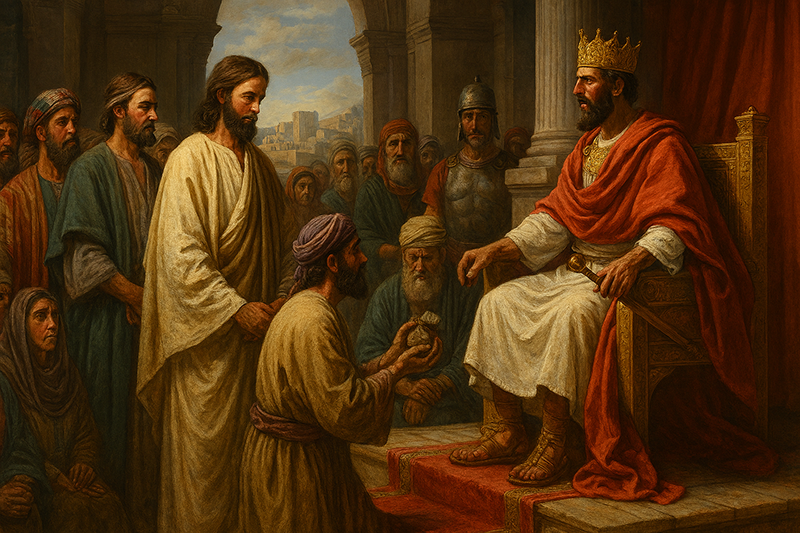
The parable is familiar: a nobleman goes to a distant country to be appointed king. Before he leaves, he entrusts ten servants with one mina each, a substantial sum of money, with the simple command: “Engage in trade with these until I return.” Upon his return, he settles accounts. Two servants have been fruitful, trading wisely and multiplying the investment. They are rewarded with authority and praise. One servant, however, motivated by fear, hid the mina in a handkerchief. He returns the original sum, untouched and without increase. The king condemns his inaction and takes the mina from him, giving it to the one who had ten.
At its heart, this parable is not primarily about money; it is about the nature of God’s Kingdom and our role within it.
1. The King’s Trust and Our Mission
The nobleman, who represents Christ, does not give his servants identical talents or abilities, but he gives them an identical trust. The one mina can be seen as the fundamental gift of our faith—the life of God within us, the truth of the Gospel, the grace of our Baptism. It is the "capital" we have all been given. The command is clear: "Engage in trade." Our Christian life is not meant to be static or passive. We are called to be active, to "trade," to put our faith to work in the world. This means growing in holiness, practicing charity, proclaiming the truth with love, and using our unique gifts to build up the Body of Christ.
2. The Sin of “Playing it Safe”
The third servant’s failure is not one of wickedness, but of inaction. He did not lose the mina; he preserved it. His sin was the sin of omission, rooted in a distorted image of the king. He says, “I was afraid of you, because you are a demanding man; you take up what you did not lay down and you harvest what you did not plant.”
How often do we fall into this trap? We can view God as a harsh, demanding taskmaster, and so we retreat into a safe, minimalistic faith. We go to Mass, say our prayers, but we never take a risk for the Gospel. We never step out in charity, never share our faith, never invest our time or talent in the "trade" of the Kingdom. We bury our mina in the handkerchief of routine, comfort, and fear. We think, "If I just don't mess up, I'll be okay." But the parable reveals that to do nothing with the gift of faith is to reject it. God did not give us His grace to be hidden, but to bear fruit.
3. The Judgment of Divine Fruitfulness
The king’s judgment is severe: “To everyone who has, more will be given, but from the one who has not, even what he has will be taken away.” This is not a statement of arbitrary cruelty, but a spiritual law. A muscle that is used grows stronger; one that is not used atrophies. A faith that is actively lived, shared, and "traded" deepens and expands. A faith that is hoarded and hidden withers and dies. The Lord rewards initiative, courage, and fidelity—not with mere material wealth, but with a greater share in His own divine life and authority. "Well done, good servant! You have been faithful in this very small matter, take charge of ten cities." Our small acts of love here on earth prepare us for an eternal communion with God.
4. A Call to Action for Today
As Catholics, this parable calls us to a profound examination of conscience.
What is the "mina" the Lord has entrusted to me? (My time, my talents, my financial resources, my specific charisms, my personal story of conversion?)
Have I buried it out of fear, sloth, or a misunderstanding of God’s generosity?
In what "marketplace" is the Lord calling me to trade? (My family, my workplace, my parish, my community?)
The Kingdom of God is not a passive waiting room. It is an active and dynamic enterprise. We are not called to be mere custodians of a treasure, but joyful and courageous investors, trusting that the King who entrusted us with His gifts will return to welcome us with the words we all long to hear: “Well done, good servant! Come, share in your master’s joy.”
Let us pray:
Heavenly Father, you have entrusted us with the priceless gift of your Son and the life of your Spirit. Forgive us for the times we have buried these gifts out of fear or sloth. Grant us the courage and wisdom to actively engage in the work of your Kingdom, so that our faith may not diminish, but grow and bear fruit that will last for eternity. We ask this through Christ our Lord. Amen.