
Daily Reflection
Select a Date
Reflection for November 21, 2025
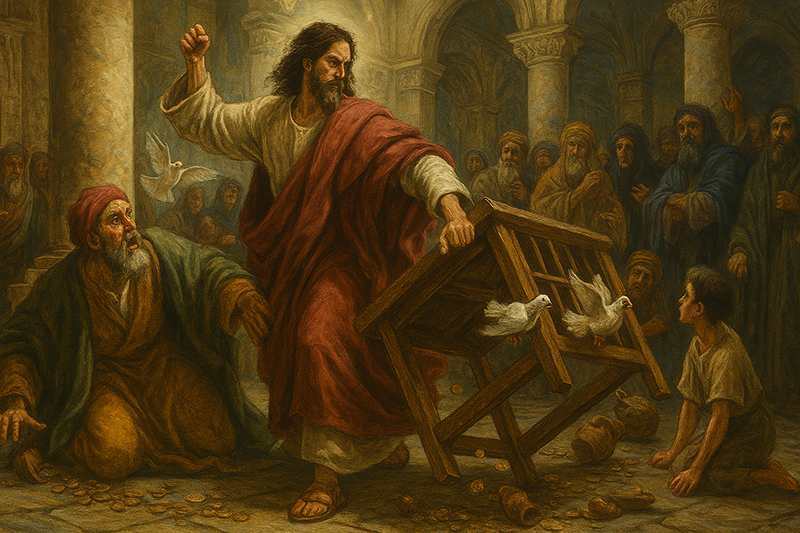
A House of Prayer: Reflecting on Holy Zeal
The image of Jesus in this passage is one of fiery, righteous zeal. This is not the gentle shepherd holding a lamb, but the divine reformer wielding a whip of cords. He enters the Temple, the very heart of Jewish worship, the place where God’s presence dwelled, and finds it corrupted. The outer court, the Court of the Gentiles, which was meant to be a place of prayerful gathering for all nations, had become a noisy, chaotic marketplace. The sacred had been suffocated by the secular, and worship had been replaced with transaction.
Jesus’s action is a forceful act of purification. He quotes the prophets Isaiah and Jeremiah, declaring, “My house shall be a house of prayer, but you have made it a den of thieves.” The “den of thieves” is a stinging indictment. It suggests that the Temple system, which should have been facilitating a genuine encounter with God, had become a place where people were, in a spiritual sense, being robbed. Their relationship with God was being monetized and obstructed by greed and corruption.
For us, as Catholics, this scene holds a profound and challenging truth. The Temple of old finds its fulfillment in the Person of Christ and, by extension, in us, His Body, and in our churches.
First, we must look at our own souls. St. Paul reminds us, “Do you not know that your body is a temple of the Holy Spirit within you?” (1 Corinthians 6:19). What clutter have I allowed into the inner court of my heart? What distractions, sins, and worldly attachments have set up shop, drowning out the quiet voice of God in prayer? Jesus comes with the same holy zeal to cleanse our inner temple, to drive out the pride, resentment, impurity, and greed that make a mockery of our calling. This purification is not a gentle process; it can feel disruptive and uncomfortable, much like the overturned tables in the Temple. It is the work of the Sacrament of Reconciliation, where Christ’s grace sweeps our souls clean.
Second, we must look at our parishes, our physical churches. When we enter this sacred space, do we treat it as a “house of prayer”? Is it a place of reverent encounter, or has it become merely a social hall? This reflection isn't about the legitimate community we build, but about the primary purpose of the building: the worship of God, most especially in the Holy Sacrifice of the Mass. Do we prepare our hearts to enter? Do we foster an atmosphere of silence and awe before and after Mass, recognizing that we are in the Real Presence of Our Lord in the Tabernacle? Jesus’s cleansing urges us to reclaim the sacredness of our churches, ensuring they remain places where every person can draw near to God without obstacle.
Finally, we see the reaction of the people and the authorities. The corrupt leaders were furious. Their profitable system was threatened. Yet, the ordinary people “were hanging on his words.” They recognized in Jesus the truth and authority they had been missing in the established religious structure. This is the ultimate fruit of Christ’s purification: not desolation, but a renewed capacity to hear God’s word. When our souls and our churches are cleansed of clutter, we too can “hang on His words.” The Scriptures, the Homily, the quiet whisper in prayer—they become life-giving.
Prayer
Lord Jesus, you who cleansed the Temple with holy zeal,
come now with that same purifying love into the temple of my heart.
Drive out all that is not of you—the noise, the pride, the sin that clings so closely.
Help me to reverence your presence in your Church and in my soul.
Make my life a true house of prayer, a place where you alone are worshipped and your word is cherished.
May I, like the people in the Gospel, always hang on your every word, for you are Lord, forever and ever. Amen.