Daily Reflection
Select a Date
Reflection for November 22, 2025
The God of the Living
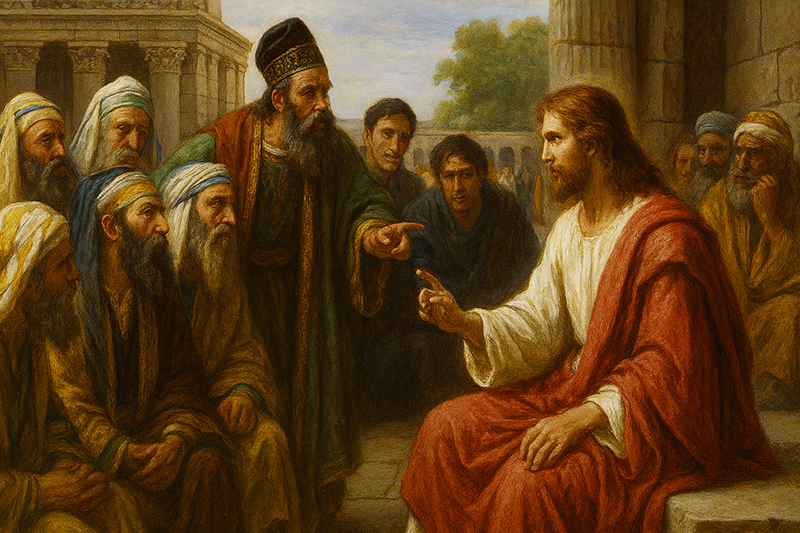
In the Gospel of Luke, chapter 20, we encounter a scene that feels both ancient and strikingly modern. A group of Sadducees, who deny the resurrection of the dead, approach Jesus with a contrived and cynical question. They present the case of a woman who had seven husbands, following the law of levirate marriage, and ask, “At the resurrection, whose wife will she be?”
On the surface, this is a question about the afterlife, designed to trap Jesus in a logical conundrum and make the concept of resurrection seem absurd. But at its heart, it is a question born of a limited imagination—an attempt to understand the life of Heaven through the flawed and finite lens of our earthly existence.
Jesus’ response is a masterful correction that reveals two profound truths—one about heaven and one about God.
First, Jesus reveals the glorious nature of the resurrected life. He tells the Sadducees that the children of this age marry, but those who are “deemed worthy to attain to the coming age and to the resurrection of the dead… neither marry nor are given in marriage. They can no longer die, for they are like the angels; and they are the children of God because they are the ones who will rise.”
With these words, Jesus shatters their narrow, materialistic view of heaven. The life to come is not merely a continuation of this life, with its same relationships, struggles, and limitations. It is a transformation. The bonds of love we forge on earth are not lost, but they are transfigured and perfected in the boundless love of God. The particular, exclusive love of marriage will be caught up into the universal, all-encompassing love that unites all the saints in the communion of the Holy Trinity. We will not be less ourselves, but more fully ourselves, freed from the brokenness and possessiveness that can taint even our best human loves. We will love each other perfectly in and through God.
Second, and most importantly, Jesus reveals the very nature of God. Knowing the Sadducees only accepted the first five books of the Bible (the Torah) as authoritative, Jesus draws from the book of Exodus. He reminds them of the scene at the burning bush, where God reveals Himself to Moses as “the God of Abraham, the God of Isaac, and the God of Jacob.” Then comes the divine punchline: “He is not the God of the dead, but of the living, for to him all are alive.”
This is the central truth of our faith. God’s relationship with the patriarchs was not a temporary contract that ended with their physical death. The great “I AM” defines Himself by an eternal, unbreakable covenant with them. If God is their God, then they must, in some real sense, be. Their existence, their personhood, is sustained in Him. Death does not have the final word because the God of life holds them in being. The resurrection is not a divine afterthought; it is the logical conclusion of who God is. He is the source of all life, and His love is stronger than death.
For us today, this passage is a powerful remedy for spiritual small-mindedness. How often do we, like the Sadducees, try to fit God into our limited categories? We worry about the details of the afterlife, or we project our earthly anxieties and desires onto heaven. Jesus calls us to lift our eyes to a higher reality.
He calls us to trust not in a precise blueprint of the future, but in the character of the God who holds that future. We are called to have faith in the "God of the Living." This means that every soul we have loved and "lost" is, in truth, alive in Him. It means that our own lives, with all their struggles, are held in the heart of a God who promises not just to remember us, but to raise us up.
This truth should fill us with hope and freedom. We can live our earthly lives with greater detachment and greater love—detachment from the transient structures of this world, and a deeper, more Christ-like love for the eternal souls we encounter. We are not journeying toward annihilation, but toward a fulfillment beyond our wildest dreams, where we will be fully alive in the God who is, was, and ever shall be, the God of the Living.
Let us pray:
Heavenly Father, God of Abraham, Isaac, and Jacob, you are the God of the living. Strengthen our faith in the resurrection and the life of the world to come. Free us from limited visions of your glory and help us to trust in your promise of eternal life. May we live this day as children of the resurrection, seeking you in all things, and loving our neighbors as souls destined for eternity with you. We ask this through Christ our Lord. Amen.