Daily Reflection
Select a Date
Reflection for March 5, 2026
The Silent Scream of the Rich Man
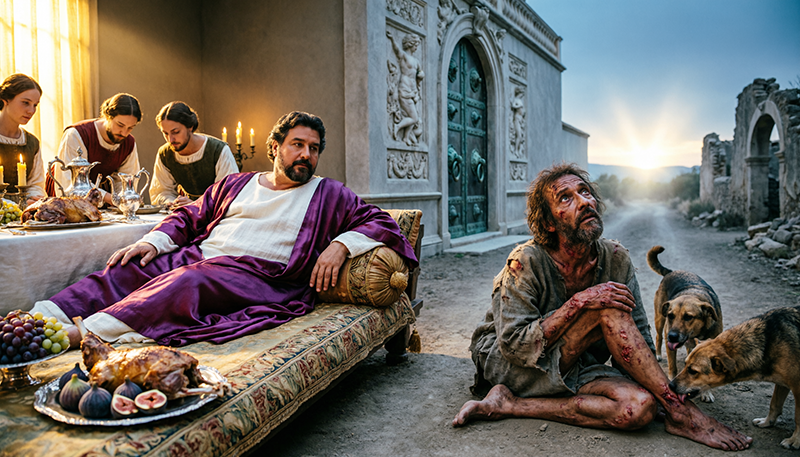
The parable of the Rich Man and Lazarus is one of Jesus’ most vivid and unsettling stories. It presents a stark contrast not just between poverty and wealth, but between seeing and ignoring. The Rich Man isn’t condemned for his wealth, but for his blindness. Lazarus lay at his very gate, a living, breathing wound at the doorstep of his abundance. The Rich Man saw him every day, yet he remained a nameless part of the landscape, an inconvenience rather than a brother.
The chasm that separates them in the afterlife did not suddenly appear at the moment of death. It was forged, day by day, in the space between the rich man's table and the poor man's place at the gate. The sin was in the indifference, in the failure to let the suffering of another penetrate the heart.
In a beautiful and challenging twist, the Church has traditionally seen in this parable a reflection of the Eucharist. At every Mass, we gather at the Table of the Lord, but outside our own gates—in our neighborhoods, our workplaces, our very families—there are “Lazaruses” waiting. They may be hungry for food, for kindness, for attention, or for forgiveness. The Eucharist is a communion with Christ that must compel us into communion with each other.
The Rich Man’s final, desperate plea is for his brothers to be warned. The answer is sobering: “They have Moses and the prophets.” In other words, they already have everything they need to see. The question for us is not whether we will get a sign, but whether we will open our eyes to the signs already given—the Word of God, the teaching of the Church, and the poor man at our gate. For in neglecting him, we risk ignoring the Lord Himself.